Lu Kang
The Romance of the Three KingdomsLu Kang is a leading Wu commander whose relationship with the Jin general Yang Hu complicates the usual logic of enemy lines. Their friendship rests on reciprocal trust and respect, even as they serve opposing states; Lu Kang’s candid counsel against invading Jin, and the ruler’s punishment of him for it, expose the widening divide between responsible leadership and Wu’s increasingly fearful court.
Position and Military Context
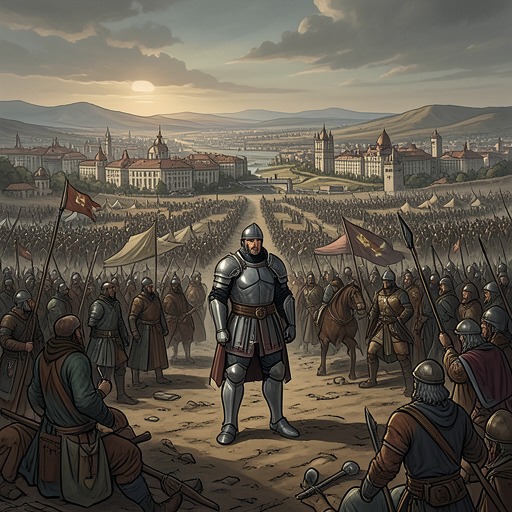
Lu Kang commands Wu forces in the north, facing Yang Hu at Xiangyang. Yang has earned the local people’s goodwill through careful administration and by having his soldiers grow their own provisions, rather than take crops from civilians. He has also treated captured Wu soldiers benevolently when they wished to return home. Though Yang’s position gives him the capacity to prepare for war, he counsels patience and regards Lu Kang as an opponent deserving respect.
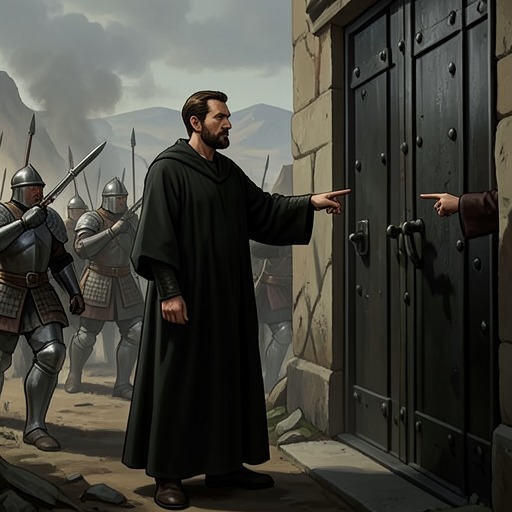
The strategic tension sharpens when Wu’s ruler orders Lu Kang to attack Jin. Lu Kang responds with a direct assessment: the invasion will not succeed, and Wu should instead attend to virtue and peace at home. His advice treats domestic political health as inseparable from military strength. The ruler, however, interprets Lu Kang’s judgment as evidence that he is too friendly with the enemy, and removes him from command, appointing Sun Ji in his place. The court’s silence in response underscores how little room remains for frank counsel.
Friendship with Yang Hu
The friendship between Lu Kang and Yang Hu develops through practical acts of trust rather than declarations. They exchange meat and wine across the lines. When Yang learns that Lu Kang is ill, he sends his own physician and a special medicine. Members of both entourages wonder whether such gifts might be poisoned, but each commander rejects the suspicion as an insult to the other’s integrity, and they eat and drink without fear.
Their conduct stands in contrast to the hostility expected between rival commanders. Neither man mistakes personal regard for political agreement: Yang urges caution about war, while Lu Kang opposes the invasion ordered by Wu. Their relationship nevertheless makes mutual confidence possible across the military boundary, and the ruler of Wu turns precisely that confidence into grounds for suspicion.
Political Consequences and Legacy
Lu Kang’s demotion is one sign of the worsening political climate in Wu. After his death, together with Ding Feng’s, the ruler’s abuses grow more severe, and fear increasingly stifles discussion and planning. The account describes a court where opposition is dangerous and candid advice has already been punished, leaving the state less able to deliberate openly about war and peace.
Lu Kang’s story therefore links the personal ethics of command to the fate of the state. His friendship with Yang Hu does not erase their rivalry; instead, it reveals a form of honor that the Wu ruler mistakes for disloyalty. In the account’s unfolding movement toward war, the loss of Lu Kang and the silencing of his counsel mark a decline in the political judgment that might have restrained conflict.